 Castle Tours Europe
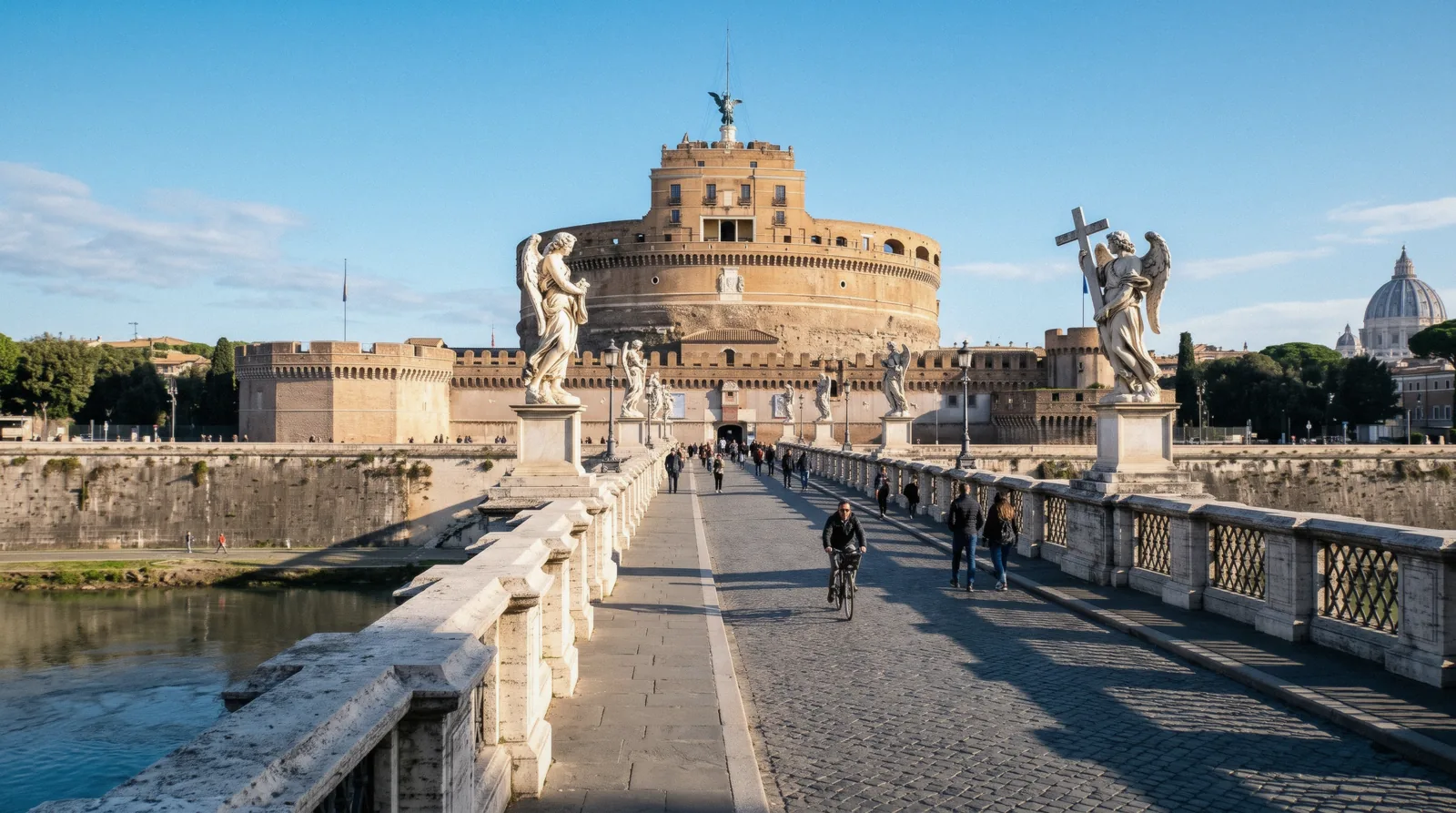
Castel sant angelo began as the tomb of the emperor Hadrian and ended up as the popes' fortress, prison and escape bunker on the Tiber. Today it is Rome's National Museum, and you reach it across the angel bridge in about ten minutes from St Peter's. This guide compares the three bookable Castel Sant'Angelo tickets and tours and walks you through what is worth your time inside. For the full shortlist, see the castle tours in Europe.
Quick answer Tickets, hours and the best tour
Castel Sant'Angelo is Hadrian's mausoleum turned papal fortress, now a museum on the Tiber in Rome. It opens Tuesday to Sunday 09:00 to 19:30 with last admission at 18:30 and closes Mondays. Entry with an audio guide starts at $28, and a guided visit with a live guide is the better pick if you want the escape corridors and papal apartments explained.
Key takeaways
- Every ticket below includes castle entry. The entry ticket with digital audio guide suits independent visitors at $28.
- Want the story told? The guided tour climbs from the tomb to the papal apartments and the angel terrace in 1 to 2 hours.
- Short on time? The one-hour panoramic tour includes pre-booked entry and finishes on the terrace views.
- The castle links to the Vatican by the Passetto di Borgo, the popes' 800-metre escape wall.
Key facts
Opening hours
| Tuesday to Sunday | 09:00–19:30 |
|---|
Closed Monday
Admission
- Adult
- Entry included with the [entry ticket and digital audio guide](#tour-57) from $28
Planning it
- Time needed
- Our estimate: 1.5 to 2 hours inside
- Book ahead
- Optional — walk-up usually fine
- Address
- Lungotevere Castello 50, 00193 Rome, Italy
Castel Sant'Angelo tickets and tours compared
Three bookable options cover a visit to Castel Sant'Angelo, and all of them include castle entry in the price. The difference is how you see it: alone with a phone audio guide, with a live guide for an hour, or with a live guide for longer and deeper into the building.
Do you want a live guide, or your own pace with a phone in your ear?
| Option | Price | Length | Includes | Book |
|---|---|---|---|---|
| Entry Ticket & Digital AudioguideIndependent visitors who like to wander at their own pace | $28 | 2 hours | Entry plus a smartphone audio guide, from the castle's riverside gate | Check Availability |
| Tour with Panoramic ViewsTravellers fitting the castle into a packed Rome day | $34.25 | 1 hour | Pre-booked entry and an English-speaking guide, ending on the terrace views | Check Availability |
| Guided TourAnyone who wants the full story from tomb to papal rooms | $65 | 1 - 2 hours | Entry and a live guide from Hadrian's tomb up to the papal apartments and the terrace of the angel | Check Availability |
All three include the museum entry, so the price you see is the price of getting in. Figures current in Q4 2026.
Book a Castel Sant'Angelo tour
These are the Castel Sant'Angelo options you can book now. Every one includes admission to the museum.
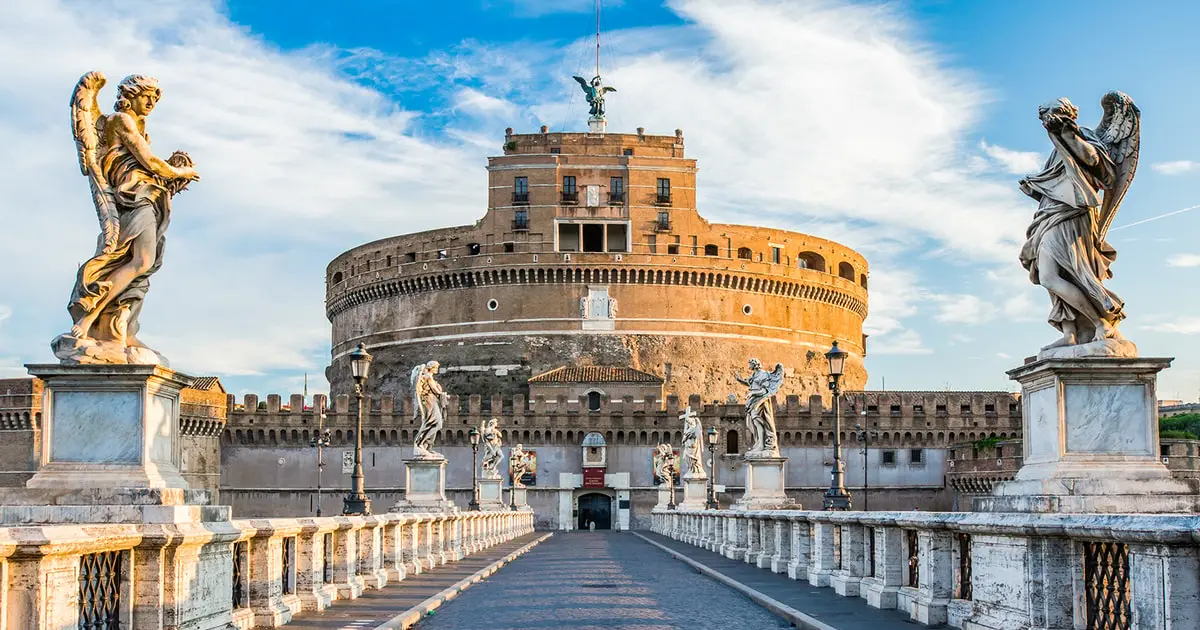 from $28
Most reviewed
Rome: Castel Sant'Angelo Entry Ticket & Digital Audioguide
Your entry to Castel Sant'Angelo with a smartphone audio guide, from the castle's riverside gate.
Check Availability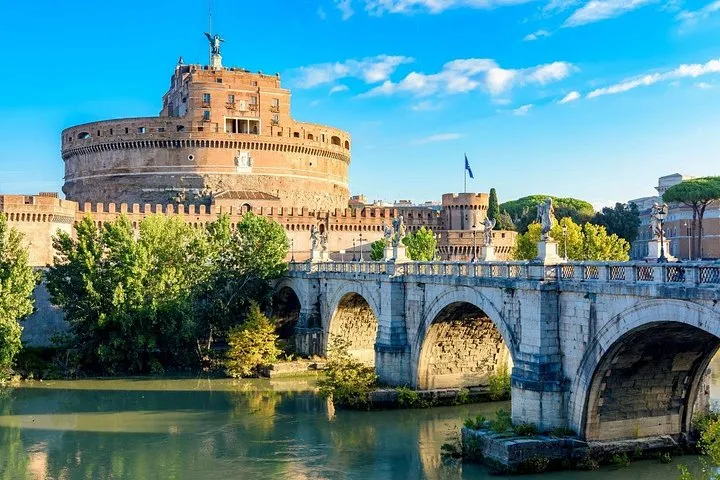 from $34.25
Panoramic terrace
Castel Sant’Angelo Tour with Panoramic Views
One hour inside Castel Sant'Angelo with an English-speaking guide on the guided option.
Check Availability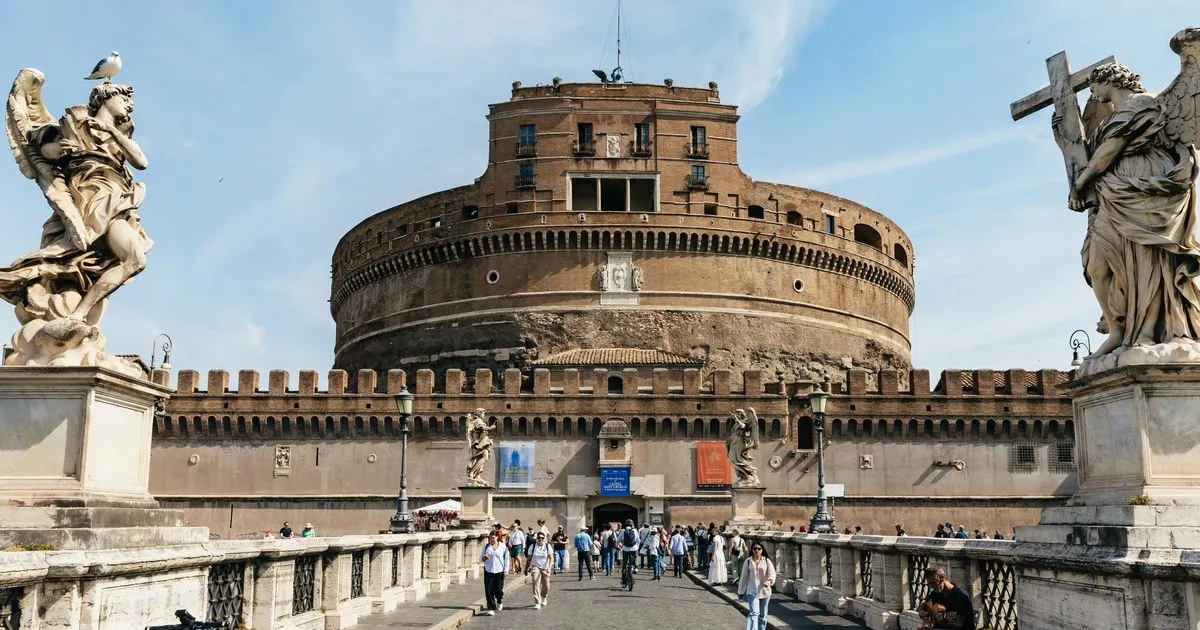 from $65
Guided
Rome: Castel Sant'Angelo Guided Tour
A guide takes you up from Hadrian's tomb to the papal apartments and the terrace of the angel.
Check AvailabilityPrices, ratings and details are the platform's own. dollar figures are the listed prices — the platform bills in your account's currency.
What Castel Sant'Angelo is, and why it matters
A tomb, a fortress, a papal palace and a prison, all inside one drum of a building on the Tiber. Few monuments in Europe pack as many uses into a single structure.
From Hadrian's tomb to the Castle of the Holy Angel
The emperor Hadrian built the mausoleum on the right bank of the Tiber between 134 and 139 AD as a resting place for himself and his family. His ashes arrived a year after his death, joined later by those of succeeding emperors, the last recorded deposition being Caracalla in 217. The urns probably sat in what is now the Treasury Room, deep inside the building.
The building's name comes from a vision. Legend holds that the Archangel Michael appeared on top of the mausoleum and sheathed his sword, a sign that the plague of 590 had ended. A bronze statue of the angel by Peter Anton von Verschaffelt has stood on the roof since 1753, and an earlier marble version by Raffaello da Montelupo now sits in an interior courtyard.
The popes' fortress and escape route
From the 14th century the popes turned the tomb into a castle, and Pope Nicholas III connected it to St Peter's Basilica by a covered fortified corridor called the Passetto di Borgo. That elevated wall passage, about 800 metres long, gave a pope a protected escape route from the Vatican. Pope Alexander VI used it in 1494 when Charles VIII invaded, and Pope Clement VII ran along it during the Sack of Rome in 1527 as troops of Charles V massacred almost the entire Swiss Guard on the steps of St Peter's.
The castle also served as a prison and residence. Giordano Bruno was held here for six years, and Benvenuto Cellini described strolling the ramparts and shooting at enemy soldiers while locked up here himself. Puccini set the third act of Tosca on these ramparts, where the heroine leaps to her death. Decommissioned in 1901, the castle opened as the Museo Nazionale di Castel Sant'Angelo and drew over 1.2 million visitors in 2016. If you enjoy fortress-palaces, it pairs well with Hohensalzburg Fortress in Salzburg, which stayed a fortress rather than a tomb.
- Tomb for Hadrian and later emperors, from 139 AD
- Fortress inside the Aurelian Walls from 401
- Papal refuge and residence from the 14th century
- Prison under the Papal State, museum since 1901
What you see inside, in walking order
The museum is built vertically: you spiral up the drum of the building from the ancient tomb core to the papal floors and finish on the roof terrace. Follow the route below and you will not backtrack.
Bottom to top: tomb, courtyard, papal floors, terrace
Enter from the riverside gate and start in the ancient core, the sloping ramp that once carried funeral processions up to the burial chamber. The Treasury Room here held the imperial urns. You then emerge into the Cortile dell'Angelo, the courtyard where Montelupo's marble angel stands and where executions took place in the prison years.
Above the courtyard come the papal floors. The Sala Paolina is the richest room, frescoed for Paul III, who built himself an apartment worthy of a pope under siege. The Cagliostra, named for the alchemist Cagliostro who was imprisoned here, sits lower in the building and recalls its grimmer use. The climb ends on the upper terraces beside Verschaffelt's bronze angel, with views over the Tiber, Ponte Sant'Angelo and the dome of St Peter's. On a clear evening the terrace is the best viewpoint in the centre of Rome, our estimate. Most visitors spend 1.5 to 2 hours covering the full spiral.
The Passetto di Borgo, the wall you can see from the street
From the terraces look west and you can trace the Passetto di Borgo, the elevated 800-metre passage inside an old city wall that links the castle to Vatican City. It began as a defensive wall rebuilt by Pope Leo IV around 852, with the enclosed escape corridor added under Nicholas III in 1277 or later. The top level is a patrol walkway, the hidden corridor runs beneath it.
Walking it is not part of a standard visit. The Passetto di Borgo appears only on the private Friday and Saturday option of the one-hour panoramic tour, so choose that option if the escape route is the reason for your visit.
Hours, tickets and the quiet times
The castle keeps simple museum hours but closes every Monday, which catches out more visitors than any queue does.
Opening hours and last entry
Castel Sant'Angelo opens Tuesday to Sunday from 09:00 to 19:30, with last admission at 18:30. It closes on Mondays, except special openings. That gives you a long afternoon window, but do not arrive at 18:00 expecting a full visit. The route up the building takes 1.5 to 2 hours at a comfortable pace, our estimate.
Every ticket option here includes entry, so there is no separate purchase at the gate to plan around. A passport or ID is mandatory for the panoramic tour, and it is wise to carry ID for any castle visit in Rome since security checks apply at the entrance.
Dress and the quietest slots
There is no dress code for a museum, but the building is a climb. The route from the tomb to the terraces is a spiral of ramps and stairs, and none of the tours is suitable for wheelchair users, so wear shoes that cope with stone steps.
For quiet, aim for the first hour after the 09:00 opening or mid to late afternoon on a weekday, our estimate. Thepapal rooms are narrow, and a tour group filling the Sala Paolina blocks the whole corridor. Monday closures mean Tuesdays can be busier than usual as displaced visitors arrive, our estimate. The entry ticket with audio guide lets you start as early as 09:00, which is the cheapest way to beat the groups.
Getting to Castel Sant'Angelo
The castle sits on the Tiber in the Borgo district, an easy walk from the Vatican and from the centre across the angel bridge.
Finding the entrance and the meeting points
The address is Lungotevere Castello 50, on the embankment opposite Ponte Sant'Angelo. The bridge itself is part of the approach: Hadrian built it to face the mausoleum, and Bernini-era angels holding the instruments of the Passion line it today. Walk the bridge from the old town side and the castle drum fills the view.
Meeting points differ by option. The entry ticket with audio guide is collected at Viale Cardinale dell'Acqua by the castle's riverside gate. The guided tour meets at the museum entrance on Lungotevere Castello 50. The panoramic tour meets at the castle's main gate. Allow a few minutes to find the right one, and arrive ten minutes early as tours leave on time.
From St Peter's, from the centre, and combining the two
From St Peter's Square it is about a 15 to 20 minute walk down Via della Conciliazione to the castle, our estimate. From Piazza Navona and the historic centre, cross Ponte Sant'Angelo and you are there, our estimate 10 minutes. An underground pedestrian tunnel under Piazza Pia is planned to connect the castle and St Peter's fully on foot, part of an ongoing project.
If you are planning a Rome day around the castle, see our castle day trips page for how it fits alongside other fortress visits. For a wider shortlist, the best castles in Europe puts Castel Sant'Angelo in context against forts such as Predjama Castle, built into a cliff mouth in Slovenia.
How much time to give Castel Sant'Angelo
The honest answer depends on whether the papal history is the point of your Rome trip or a stop on the way to St Peter's. Three routings cover the realistic options.
Three ways to spend your time
A quick visit is one hour, which is exactly what the panoramic tour is built around: the tomb core, a taste of the papal floors and the terrace. The standard visit is 1.5 to 2 hours on your own with the entry ticket and audio guide, enough for the full spiral at a relaxed pace. The full visit is the guided 1 to 2 hours of the guided tour plus extra time on the terraces afterwards, which rewards anyone interested in the Sack of Rome, Cellini or Tosca.
Do not plan the castle and the Vatican museums back to back in one morning. The castle deserves fresh legs for the climb to the terrace.
| Routing | Time | How | Best for |
|---|---|---|---|
| Tomb and terrace only | 1 hour | Panoramic guided tour, entry included | Travellers with a full Rome itinerary |
| Full spiral at your own pace | 2 hours | Entry ticket with digital audio guide | Independent visitors, photographers |
| Deep visit with a guide | 2 to 3 hours | Guided tour plus free time on the terraces | History fans, opera and Passetto enthusiasts |
When to go for the light
The terrace faces St Peter's dome, and late afternoon light across the Tiber is the payoff for the climb, our estimate. With the museum open until 19:30 and last admission at 18:30, a late entry in summer puts you on the terrace near sunset. The one drawback is that the last hour is also when the corridors empty, which is a bonus rather than a problem for photographs.
A short history of Castel Sant'Angelo
One building, nearly nineteen centuries of continuous reuse. The dates below explain why the castle looks the way it does.
-
134-139 AD
Hadrian builds his mausoleum
A decorated cylinder with a garden top and a golden quadriga rises on the right bank of the Tiber, faced by the new Pons Aelius bridge.
-
139 AD
Hadrian's ashes arrive
The emperor's ashes are placed in the tomb a year after his death at Baiae, later joined by emperors up to Caracalla in 217.
-
401
Fortress conversion
The tomb becomes a military fortress and is folded into the Aurelian Walls, and much of its decoration is lost.
-
410
Alaric sacks Rome
Visigoth looters scatter the urns and ashes, and besieging Goths in 537 hurl the bronze and stone statuary down at their attackers.
-
590
The angel and the plague
Legend holds that Archangel Michael appears atop the mausoleum sheathing his sword, ending the plague and giving the castle its name.
-
c. 1277
The Passetto takes shape
Pope Nicholas III, or possibly Boniface IX a century later, creates the enclosed escape corridor linking the Vatican to the castle inside an old wall.
-
1527
Clement VII escapes the Sack of Rome
The pope flees along the Passetto as Charles V's Landsknechte massacre the Swiss Guard on the steps of St Peter's.
-
1753
The bronze angel goes up
Peter Anton von Verschaffelt's bronze Saint Michael replaces Montelupo's 1536 marble statue on the roof, and the marble moves into an inner courtyard.
-
1901
The castle becomes a museum
Decommissioned, the building opens as the Museo Nazionale di Castel Sant'Angelo and today draws well over a million visitors a year.
Sources: Castel Sant'Angelo and Passetto di Borgo, Wikipedia.
Dos and don'ts at Castel Sant'Angelo
Small mistakes cost visitors time here. The list is short.
Do
- Book ahead. A timed option such as the entry ticket with audio guide locks in your slot and skips gate uncertainty.
- Bring ID. A passport or ID is mandatory for the panoramic tour and sensible for the museum.
- Cross Ponte Sant'Angelo on foot before you enter. The angel bridge is Hadrian's own approach to the tomb.
- Save time for the terrace. The roof views of St Peter's and the Tiber are half the visit.
- Choose the private Friday or Saturday option of the panoramic tour if the Passetto di Borgo is why you came.
Don't
- Don't arrive on a Monday. The castle is closed, except special openings.
- Don't enter after 18:30. Last admission is 18:30 and the spiral route takes 1.5 to 2 hours, our estimate.
- Don't expect step-free access. None of the current tours is suitable for wheelchair users.
- Don't skip the ancient core. The tomb ramp and Treasury Room are the oldest and quietest parts of the building.
- Don't plan a full Vatican morning before it. You will climb the castle stairs with tired legs.
Five things most visitors do not know
Details that change how you look at the building once you are inside.
Read these before you climb
Each fact below comes from the castle's recorded history, and each one points to something you can see or trace on site.
- The urns of the emperors probably stood in what is now the Treasury Room, deep inside the building, and the last ashes placed there were Caracalla's in 217. Wikipedia
- The columns that once decorated Hadrian's tomb were carted off to decorate St Peter's, as the painter and architect Giorgio Vasari recorded in the 16th century. Wikipedia
- Benvenuto Cellini describes strolling the ramparts and shooting enemy soldiers during the Sack of Rome while he was imprisoned in the castle on charges of embezzlement, murder and sodomy. Wikipedia
- When a pope died, prisoners with heavy sentences were transferred to Sant'Angelo and were not released under the custom that emptied Rome's other jails, a traveller noted in 1676. Wikipedia
- The Passetto's hidden escape corridor runs beneath a normal patrol walkway inside a wall first built around 547 and rebuilt by Pope Leo IV around 852. Passetto di Borgo, Wikipedia
Castel Sant'Angelo on the map
The castle stands on the Tiber just west of the historic centre, with the angel bridge as its front door.
- 1 Castel Sant'AngeloHadrian's mausoleum turned papal fortress, now the national museum, open Tuesday to Sunday.
- 2 Ponte Sant'AngeloThe bridge Hadrian built to face his tomb, now lined with baroque angels holding the instruments of the Passion.
- 3 St. Peter's BasilicaThe basilica the Passetto di Borgo was built to flee to and from, reached on foot down Via della Conciliazione.
Numbers match the pins on the map.
Near Castel Sant'Angelo
Two sights sit within a short walk, plus the fortress comparisons that belong on any castle itinerary.
Ponte Sant'Angelo
Hadrian built Pons Aelius to face his mausoleum, and it still provides the approach from the left bank of the Tiber. Walk it slowly, the baroque angels are the finest free sculpture display in Rome.
2 min walk (our estimate) Read the guideSt. Peter's Basilica
The basilica at the far end of Via della Conciliazione is the destination the Passetto di Borgo was built to escape from, and the dome dominates the castle terrace view. Read how Castel Sant'Angelo ranks among the best castles in Europe.
20 min walk (our estimate) Read the guideMore fortress visits in Europe
If the fortress-palace mix is what drew you here, Salzburg's Hohensalzburg Fortress is the closest comparison, still ringed by its own walls. Our castle tours in Europe hub collects the bookable options.
A flight away Read the guideCastel Sant'Angelo questions
How do I get Castel Sant'Angelo tickets?
The simplest route is to book the entry ticket with a digital audio guide, which includes museum admission and costs $28. Entry is included in all three options compared above, so a single booking covers your admission. Carry ID, as it is mandatory on some castle tours for security.
What are the opening hours?
Castel Sant'Angelo opens Tuesday to Sunday from 09:00 to 19:30, with last admission at 18:30. It closes on Mondays, except special openings. Plan 1.5 to 2 hours inside, our estimate, so an entry after 18:00 leaves you short.
Is a guided tour worth it at Castel Sant'Angelo?
Yes if the history matters to you. The building's story, from Hadrian's tomb through the Sack of Rome escape to the prison years, is layered, and the guided tour untangles it in 1 to 2 hours with a live guide. Self-guiders do fine with the audio guide.
Can you walk the Passetto di Borgo?
Not on a standard visit. The 800-metre escape passage to the Vatican appears only on the private Friday and Saturday option of the panoramic tour. You can see the elevated wall from the castle terraces and from the Borgo streets at ground level.
How long do you need inside Castel Sant'Angelo?
One hour covers the tomb core, a taste of the papal floors and the terrace, which is what the panoramic tour delivers. Two hours is comfortable for the full spiral at your own pace. Guided visits run 1 to 2 hours, and the terraces reward extra time.
Where is the entrance and how do I get there?
The address is Lungotevere Castello 50, on the Tiber embankment opposite Ponte Sant'Angelo. From St Peter's it is about a 15 to 20 minute walk down Via della Conciliazione, our estimate. The guided tour meets at the museum entrance itself.
Is Castel Sant'Angelo suitable for wheelchair users?
Not on the current bookable options. Both the entry ticket with audio guide and the guided tour state they are not suitable for wheelchair users, and the route up the drum is a spiral of ramps and stairs in any case.
How does it compare with other castles in Europe?
It is the only major European castle that started as an imperial tomb, which makes it unique among fortress visits. Against pile-and-bailey sites like Edinburgh Castle or riverside Chillon Castle, the draw here is the vertical route and the papal escape story.
Castel Sant'Angelo on film
Three short films that show Castel Sant'Angelo and the way in, worth a look before you pick a tour.
Castel Sant'Angelo Rome | What to Know Before You Visit!
Filmed by Rome Tourist: Castel Sant'Angelo as you will see it on the day.
Video: Rome TouristCastel Sant'Angelo Tour - Rome, Italy Tourist Hotspots
Filmed by Prowalk Tours: Castel Sant'Angelo as you will see it on the day.
Video: Prowalk ToursRome Italy - Here's What I Found Inside The CASTLE SANT'ANGELO.
Filmed by Amazing Walking Tour Of Rome Italy: Castel Sant'Angelo as you will see it on the day.
Video: Amazing Walking Tour Of Rome ItalyPrices, hours and terms are set by the venue or operator and confirmed at checkout.
We may earn a commission if you book through one of our links, at no extra cost to you. Full affiliate disclosure