 Castle Tours Europe
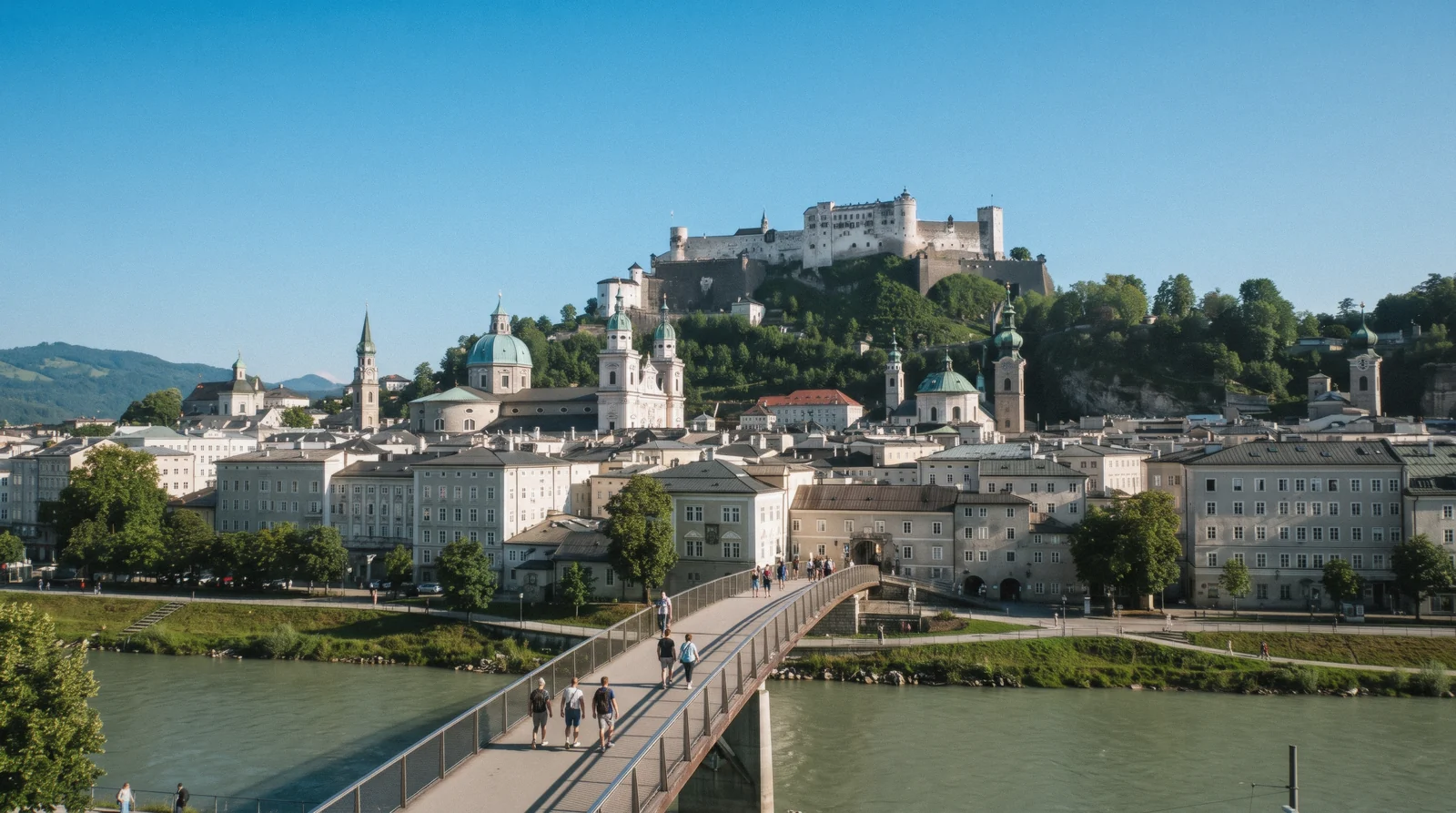
Hohensalzburg Fortress stands on the Festungsberg mountain above Salzburg's old town at 506 m, one of the largest medieval castles in Europe at 250 m long and 150 m wide. It began in 1077 under Archbishop Gebhard and served the prince-archbishops as refuge and residence for over five centuries. This guide compares the fortress admission ticket, the Mozart concert in the Golden Hall and a rail day trip from Munich, then explains how to spend your time up there. For the full shortlist, see the castle tours in Europe.
Quick answer Is Hohensalzburg worth it?
Yes. Hohensalzburg Fortress is one of the largest and best preserved medieval castles in Europe, and the ticket includes the Prince's Chambers, the museums and the panorama tour. Give it 2.5 to 3.5 hours, our estimate. Book the fortress admission ticket with the funicular option rather than climbing the steep path.
Key facts
Opening hours
| Most of the year | 09:30–17:00 |
|---|---|
| May to September, grounds | 08:30–20:00 |
Closed Open 365 days
Planning it
- Time needed
- Our estimate: 2.5 to 3.5 hours including the ride up and down
- Book ahead
- Optional — walk-up usually fine
- Address
- Mönchsberg 34, 5020 Salzburg, Austria
Tickets and tours compared
Three ways to see Hohensalzburg Fortress: entry alone, entry plus an evening concert, or the fortress as part of a day in Salzburg. Pick by how much of your day the fortress should take.
Do you want the fortress itself, the fortress plus music, or Salzburg as a whole?
| Option | Price | Length | Includes | Book |
|---|---|---|---|---|
| Salzburg: Hohensalzburg Fortress Admission TicketVisitors already in Salzburg who want the fortress itself | $22 | Flexible | Fortress rooms, panorama tour, funicular on that option | Check Availability |
| Salzburg: Best of Mozart Fortress ConcertTravellers who want a concert night, not a daytime visit | $48 | 1.5 hours | Concert in the Golden Hall and the funicular ride up and down | Check Availability |
| Salzburg Sightseeing Day Trip from Munich by RailTravellers based in Munich | from $90.20 | 10 hours | Return train and guided walk. Fortress entry is not included | Check Availability |
Every tour here has free cancellation up to 24 hours before the start. Figures current in Q4 2026.
Book a Hohensalzburg tour or ticket
All three bookable options for the fortress and for Salzburg, each with a clear purpose.
 from $22
Ticket only
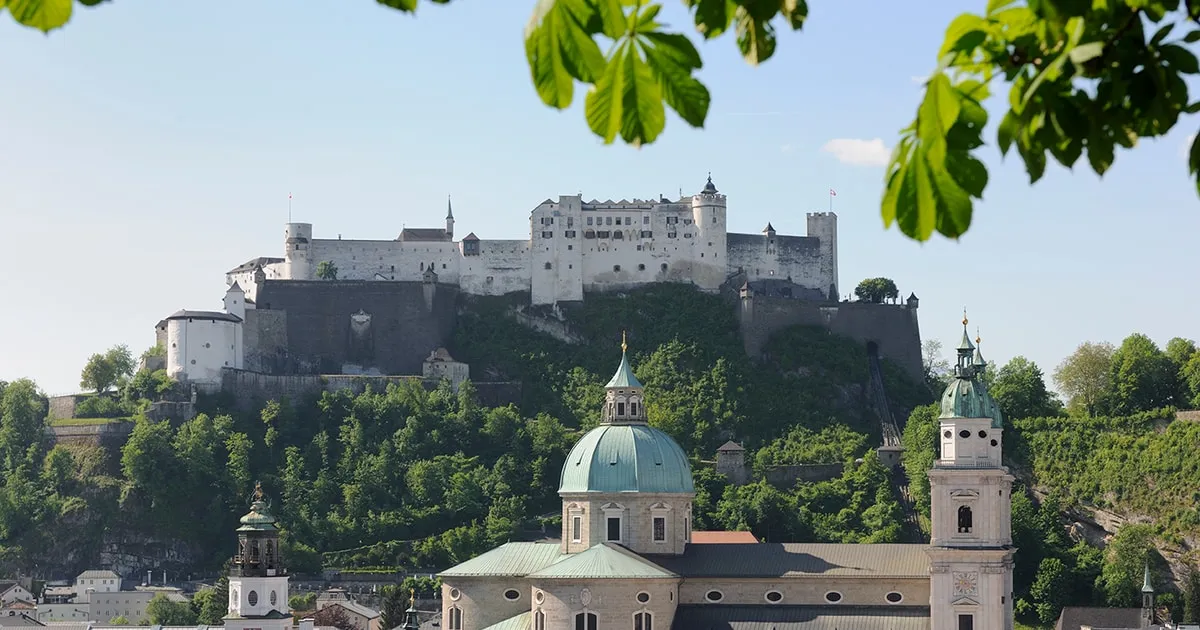
Salzburg: Hohensalzburg Fortress Admission Ticket
Entry to the fortress above Salzburg with the Prince's Chambers, museums and the panorama tour.
Check Availability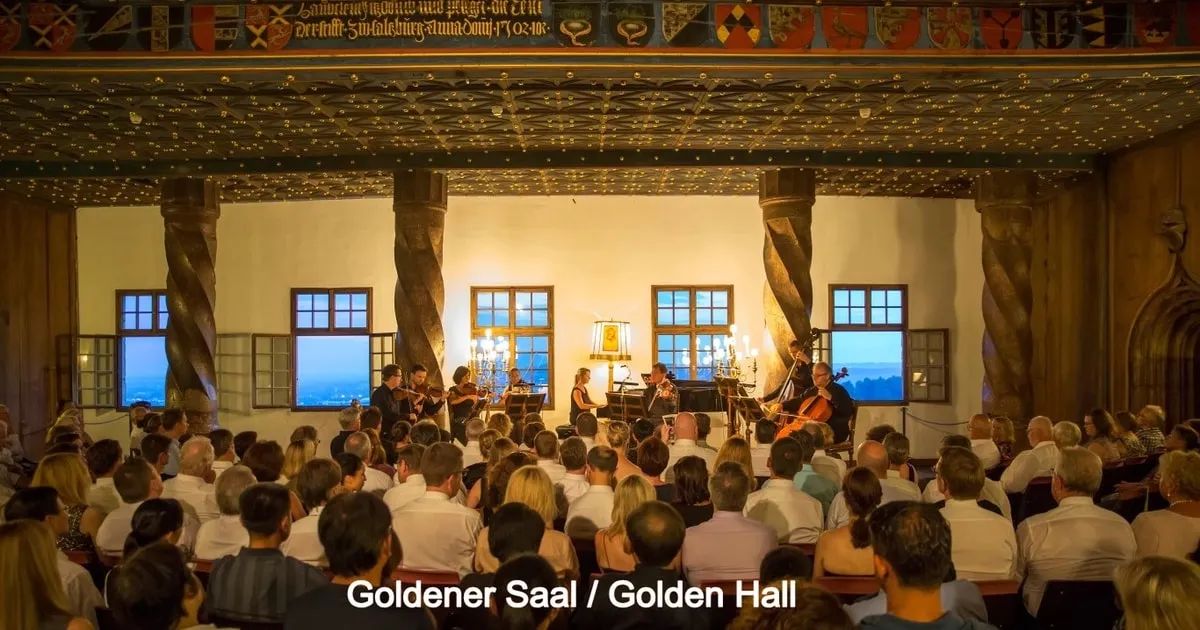 from $48
Evening concert
Salzburg: Best of Mozart Fortress Concert
A Mozart concert in the fortress's Golden Hall, with the funicular up and down.
Check Availability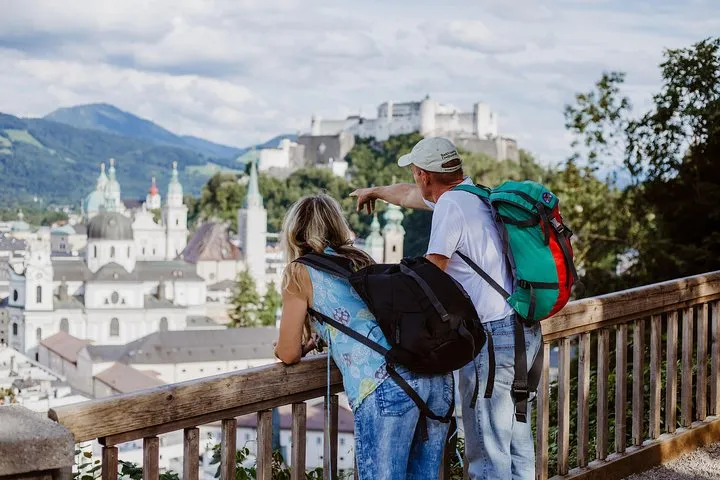 from $90.20
From Munich
Salzburg Sightseeing Day Trip from Munich by Rail
A guided day trip by rail from Munich to Salzburg's old town below the fortress.
Check AvailabilityPrices, ratings and details are the platform's own. dollar figures are the listed prices — the platform bills in your account's currency.
What Hohensalzburg Fortress is, and why it is worth going inside
A fortress, not a palace for show: it was built and rebuilt by prince-archbishops who ruled both church and state in Salzburg for centuries.
A fortress built for power
Construction began in 1077 under Archbishop Gebhard von Helfenstein, who took the Pope's side against Emperor Henry IV in the Investiture Controversy and needed protection for it. The first design was a basic bailey with a wooden wall. Later archbishops kept expanding it, because Salzburg's archbishops were powerful political figures in the Holy Roman Empire and the fortress protected their independence.
The answer to why Hohensalzburg is famous is scale and survival. It is 250 m long and 150 m wide, among the largest medieval castles in Europe, and it was refurbished from the late 19th century onwards. Today it counts as one of the best preserved castles in Europe, and it is the landmark you see from every square in Salzburg's old town.
What the interiors show
The state apartments on the third floor were installed from 1498 under Archbishop Leonhard von Keutschach and were used for festivities and representation. The Golden Hall has a coffered ceiling with gold buttons symbolising the stars, and a 17-metre beam painted with the coats of arms of Keutschach, the Holy Roman Empire and the bishoprics linked to Salzburg. The Golden Chamber is the most richly furnished of the princely chambers, and Keutschach's chapel has an ornamented star vault.
The Krautturm holds the Salzburg Bull, a mechanical organ of more than 200 pipes built in 1502 and renewed in 1735. From Palm Sunday to the end of October it plays daily at 7, 11 and 18 o'clock. His coat-of-arms emblem, the turnip, appears all over the fortress as a mark of Keutschach's building work.
What you see, in walking order
The fortress is a walled complex of wings and courtyards, so work through it in one loop rather than zig-zagging.
One loop through the walls
Arrive at the top by funicular or on foot and start at the upper courtyard, the heart of the complex. From there the Prince's Chambers in the Hoher Stock, the upper floor, hold the Golden Hall, the Golden Chamber, the bedchamber and Keutschach's chapel, all on the same floor. Do these first, while you are fresh, because they are the rooms people come for.
Next, walk the panorama tour along the walls for the views over the city rooftops and the Alps, then the museums, which cover the fortress's military and everyday history. Finish with the terraces and the outer bastions, begun in the 16th century and completed in the 17th as a precaution against a feared Turkish invasion. The courtyards feel like a small village, and there are places to eat and drink within the walls if you want to slow down.
If you hear a low horn at 11:00, that is the Salzburg Bull in the Krautturm. It still marks the start and end of the carillon at the Residenzplatz below.
Not in the standard loop
The Reisszug, a very early funicular railway described in writing in 1515, still carries freight to the upper courtyard in updated form and is probably the oldest operational railway in the world. You will not ride it, but it runs beside the walking route. The fortress prison held the deposed Archbishop Wolf Dietrich von Raitenau, who died there in 1617, and in the 20th century the fortress held Italian prisoners of war in World War I and Nazi activists before Germany's annexation of Austria in 1938.
Hours, dress and the quiet times
The fortress opens every day of the year, but the funicular maintenance windows and the evening concert change what is possible.
Opening hours and maintenance
The fortress opens 365 days a year. General hours are 09:30 to 17:00. From May to September the grounds stay open 08:30 to 20:00 and the museums 09:00 to 19:00, which makes a late visit work in summer.
Two maintenance windows matter. From 9 to 13 November the indoor areas are closed for funicular maintenance. From 11 January to 14 March you walk up instead, because the funicular is under maintenance. Check the fortress's own site around those dates before booking.
Dress and quiet times
There is no stated dress code for the fortress itself, and the concert listing does not state one either, so smart-casual is a safe read for the Mozart Fortress Concert. The walk up is steep and the courtyards are cobbled, so wear shoes with grip.
For quiet, come at opening in the morning or in the last two hours of a summer evening, our estimate. Midday is the busiest stretch, when day tours from Munich and the lakes arrive together.
Getting there: funicular, footpath and the walk up
You have two ways up, and the choice is between saving your legs and saving a few euros on the ticket you did not buy yet.
The Festungsbahn funicular
The Festungsbahn funicular railway opened in 1892 and leads up from the town to the Hasengrabenbastei. The valley station sits just off the old town on Festungsgasse, and the meeting point for both the admission ticket and the fortress concert is Festungsgasse 4. The funicular takes a minute or so to the top, our estimate, and both tickets can include the ride up and down.
The fortress's own prices show what the ride is worth: the all-inclusive ticket with funicular costs $21.50 (€19.20) as an adult, against $16.23 (€14.50) on foot. Note the maintenance windows listed above, when walking is the only option.
On foot, and from Munich
The footpath up from the old town is steep. It is a real climb, not a stroll, and it is the reason the tour note says to pick the funicular option unless you want the walk. If you do walk, allow extra time in your slot.
From Munich, the Salzburg day trip by rail puts you in Salzburg's old town below the fortress after a guided walk, and you buy fortress entry separately if you want it. Bring your passport, because the train crosses the German-Austrian border and checks are possible.
How much time to give the fortress
The admission ticket is flexible, so the fortress takes the time you give it. Three routings cover most visits.
Three routings
Most visitors do well with 2.5 to 3.5 hours at the fortress, our estimate, including the funicular both ways. The state apartments, panorama tour and museums fill that easily in high season when queues slow everything down. If you also hold a concert ticket, treat the afternoon visit as the short version and go up again in the evening, because the concert is not a fortress visit.
Book the admission ticket before you travel. It is flexible, it cancels free up to 24 hours ahead, and it removes one decision from a day that already has a funicular, a steep path and a schedule to hold.
| Routing | Time needed | What it covers |
|---|---|---|
| Quick top-up | About 1.5 hours, our estimate | Funicular up, state apartments, one terrace view, funicular down |
| Standard visit | 2.5 to 3.5 hours, our estimate | Funicular, Prince's Chambers, panorama tour, museums, terraces |
| Full day in Salzburg | 10 hours, tour duration | Rail day trip from Munich with guided walk, fortress entry paid on top |
Pairing it with the rest of Salzburg
The fortress sits directly above the old town, so the cathedral and the Residenzplatz are minutes from the funicular valley station. Mozart was born in this city, worked under Archbishop Colloredo and left for Vienna in 1781, and the old town's Baroque centre has been a UNESCO World Heritage Site since 1996. A morning at the fortress and an afternoon in the old town fills a day without rushing.
Hohensalzburg Fortress timeline
From a Roman fort on the summit to one of Europe's best preserved castles.
-
Before 1077
A Roman fort on the summit
Excavations show a Roman fort stood at the highest point of the site, though the more significant Roman castrum superius was on the Nonnberg terrace nearby.
-
1077
Archbishop Gebhard starts the fortress
Construction of the current fortress begins under Gebhard von Helfenstein during the Investiture Controversy, as a bailey with a wooden wall.
-
1462
Ring walls and towers
Prince-Archbishop Burkhard II von Weißpriach builds the ring walls and towers.
-
1495 to 1519
Keutschach's expansion
Prince-Archbishop Leonhard von Keutschach expands the fortress and installs the state apartments, including the Golden Hall from 1498.
-
1502
The Salzburg Bull
Keutschach builds the mechanical organ of more than 200 pipes, renewed in 1735 and still played daily from Palm Sunday to 31 October.
-
1515
The Reisszug is described in writing
A description from this year records the Reisszug freight funicular, probably the oldest operational railway in the world.
-
1525
The only siege
During the German Peasants' War, miners, farmers and townspeople besiege the fortress for three months and fail to take it.
-
1892
The Festungsbahn opens
The funicular railway opens from the town to the Hasengrabenbastei, turning the former barracks and dungeon into a major tourist attraction.
Sources: the fortress's Wikipedia history and the Salzburg city history.
Do and do not at Hohensalzburg
Do
- Pick the funicular option on the admission ticket unless you specifically want the steep climb.
- Start with the Prince's Chambers, then walk the panorama tour before the museums.
- Listen for the Salzburg Bull at 7, 11 or 18:00 if your visit falls between Palm Sunday and 31 October.
- Look for Keutschach's turnip emblem in the chapel and around the courtyards.
- From May to September, use the late grounds hours until 20:00 for a quieter visit, our estimate.
- Carry your passport if you arrive on the rail day trip from Munich, as border checks are possible.
Don't
- Do not book the Mozart Fortress Concert expecting to see the fortress interiors, it is an evening concert.
- Do not visit in the two maintenance windows expecting the funicular, it does not run 9 to 13 November or 11 January to 14 March.
- Do not plan a short visit at midday in summer, that is when the coach groups arrive.
- Do not leave the ticket until you are standing in Festungsgasse, book it with its free 24-hour cancellation.
- Do not confuse the fortress with a palace, it was built for defence first and residence second.
- Do not skip the panorama tour, the views over the rooftops are the point of the climb.
Five things most visitors do not know
Small facts that change how you read the building once you are inside.
The list
The fortress surrendered without a fight in 1800, when French troops under General Moreau arrived and the last Prince-Archbishop Count Hieronymus von Colloredo fled to Vienna.
After the fortress was abandoned as a military outpost in 1861, the German artist Arno Lehmann lived and worked in it from 1949 until his death in 1973.
The Austrian Mint marked the fortress's 900th anniversary with a coin in 1977, and in 2006 the fortress appeared on the first coin of the Great Abbeys of Austria series, showing Nonnberg Abbey with the fortress in the background.
The bedchamber and the princely living rooms are one floor below the state apartments, because the Golden Hall and Golden Chamber were built for representation and festivities rather than daily life.
The name Salzburg comes from salt, the trade that paid for the archbishops' power, not from the German word for fortress, even though the city's name ends in -burg.
Hohensalzburg Fortress on the map
The fortress above the old town, with the funicular valley station and the sights closest to it.
- 1 Hohensalzburg FortressThe fortress on the Festungsberg at 506 m, one of the largest medieval castles in Europe.
- 2 Festungsbahn valley stationThe funicular station in the old town where the fortress tours meet at Festungsgasse 4.
- 3 Salzburg CathedralThe Baroque cathedral of the archbishops who built the fortress, a few minutes downhill from the funicular.
- 4 Mirabell PalaceA Baroque palace across the Salzach river, on the north bank of the old town.
Numbers match the pins on the map.
Near the fortress
All three are within the old town or a short walk across the river, our estimate.
Salzburg Cathedral
The archbishops' cathedral below the hill, rebuilt in Baroque style in the 17th century when Salzburg became a Counter-Reformation centre. See it after the fortress and the two together tell one story of the prince-archbishops' rule.
5 min walk from the funicular valley station, our estimate Read the guideFestungsbahn valley station
This 1892 funicular is the easiest way up, and it is the meeting point for the admission ticket and the concert. The original 1515 Reisszug freight line still runs beside the hill in updated form.
At the foot of Festungsgasse, our estimate Read the guideMirabell Palace
A palace and gardens on the north bank of the Salzach, built when Salzburg's prince-archbishops were at their height. It makes a calm stop on the walk back into town after a morning up at the fortress.
About 15 min walk from the valley station, our estimate Read the guideHohensalzburg Fortress: questions and answers
Is it worth going inside Hohensalzburg Fortress?
Yes. The ticket includes the Prince's Chambers with the Golden Hall and Golden Chamber, the museums and the panorama tour along the walls. It is one of the best preserved castles in Europe and the only siege it ever survived was in 1525. Book the admission ticket and give it half a day.
Do you need tickets for Hohensalzburg Fortress?
Yes, entry is ticketed. The fortress is open 365 days a year, generally 09:30 to 17:00, and the admission ticket covers the fortress rooms, panorama tour and, on that option, the funicular. Book online ahead of your visit.
How long do you need to visit Hohensalzburg Fortress?
Plan 2.5 to 3.5 hours including the funicular both ways, our estimate. The quick version, apartments and one terrace view, fits in about 1.5 hours, our estimate. If you also want the Mozart concert, that adds a separate evening of 1.5 hours.
Why is Hohensalzburg Fortress famous?
Size and survival. It is 250 m long and 150 m wide, one of the largest medieval castles in Europe, built from 1077 by prince-archbishops who ruled Salzburg for centuries. It was refurbished from the late 19th century and stands today as one of Europe's best preserved castles, above a UNESCO-listed old town.
Where does the fortress cable car or funicular leave from?
The Festungsbahn funicular, opened in 1892, runs from the valley station by Festungsgasse in the old town up to the Hasengrabenbastei. The tours meet at Festungsgasse 4. It does not run during maintenance from 11 January to 14 March, when you walk up instead.
How much are tickets for Hohensalzburg Fortress?
The admission ticket is $22 per person, flexible, with free cancellation up to 24 hours before. The fortress's own all-inclusive ticket with funicular is $21.50 (€19.20) for an adult. The evening concert is $48 and includes the funicular.
Can you visit Hohensalzburg Fortress on a day trip from Munich?
Yes. The Salzburg day trip by rail runs 10 hours with a return train and a guided walk of the old town below the fortress. Fortress entry is not included, so add the admission ticket if you want to go up. Bring a passport for possible border checks.
What is the Golden Hall at Hohensalzburg Fortress?
It is the state room built from 1498 under Archbishop Leonhard von Keutschach, with a coffered ceiling of gold buttons symbolising the stars and a 17-metre painted beam of coats of arms. The Mozart Fortress Concert is performed in it, with the funicular included.
Hohensalzburg Fortress on film
Three short films that show Hohensalzburg Fortress and the way in, worth a look before you pick a tour.
A Guided Tour through Hohensalzburg Fortress in Salzburg, Austria
Filmed by Salzburger Burgen und Schlösser: Hohensalzburg Fortress as you will see it on the day.
Video: Salzburger Burgen und SchlösserSALZBURG’S CROWN JEWEL: A Tour of Hohensalzburg Fortress 🇦🇹
Filmed by Matt Whiting's Europe: Hohensalzburg Fortress as you will see it on the day.
Video: Matt Whiting's EuropeSalzburg, Austria: Hohensalzburg Fortress and Mönchsberg - Rick Steves’ Europe Travel Guide
Filmed by Rick Steves' Europe: Hohensalzburg Fortress as you will see it on the day.
Video: Rick Steves' EuropePrices, hours and terms are set by the venue or operator and confirmed at checkout.
We may earn a commission if you book through one of our links, at no extra cost to you. Full affiliate disclosure